Why Minimalism Is Making a Comeback in 2026

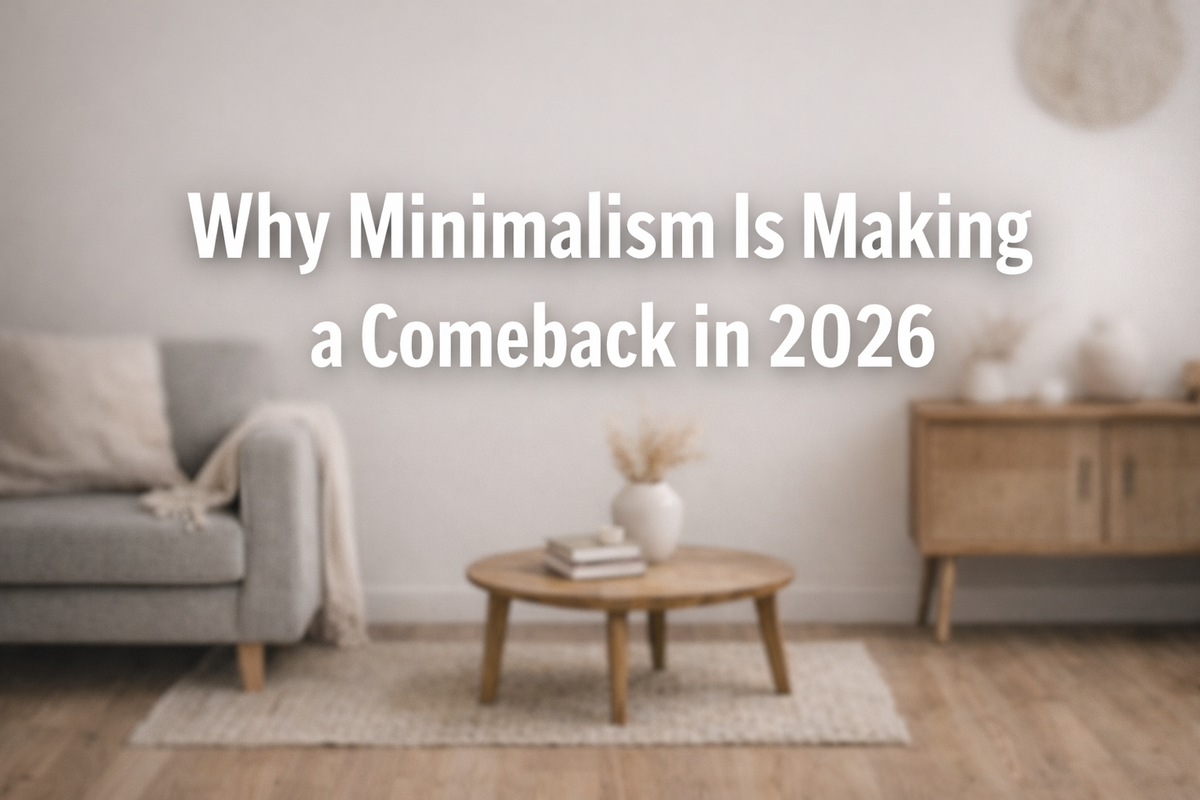
In 2016, minimalism was all about white walls, capsule wardrobes, and Scandinavian furniture. In 2020, it became a coping mechanism during global uncertainty. But in 2026? Minimalism is something deeper. It’s no longer an aesthetic trend — it’s a survival strategy, a mental health practice, and for many, a quiet rebellion against digital and consumer overload.
If you’ve felt overwhelmed by constant notifications, rising expenses, fast fashion cycles, or the pressure to “keep up,” you’re not alone. Across the world, people are stepping back and asking: Do I really need all this? And that question is bringing minimalism roaring back — but in a smarter, more intentional way.
Let’s explore why minimalism is trending again in 2026, what it looks like now, and how real people are using it to reclaim clarity, freedom, and peace.
Minimalism in 2026: Not Just Less Stuff — But Better Living
The biggest shift in 2026 is that minimalism is no longer about having the fewest items. It’s about reducing noise — physical, digital, emotional, and financial.
In the past, minimalism sometimes felt extreme:
- Throw away everything.
- Own 30 clothing items.
- Live in an all-white apartment.
Today’s minimalism is more flexible and practical. It asks:
- Does this add value to my life?
- Does this align with my priorities?
- Is this draining my time, money, or energy?
It’s less about counting objects and more about maximizing meaning.
1. Digital Overload Has Reached a Breaking Point
By 2026, the average person manages:
- Multiple messaging apps
- Social media platforms
- AI assistants
- Subscription services
- Endless content streams
We live in a constant scroll. Notifications ping every few minutes. Even entertainment feels overwhelming because there are too many choices.
Digital fatigue is real.
That’s why digital minimalism is exploding. People are:
- Deleting non-essential apps
- Limiting screen time
Minimalism now includes decluttering your phone, your inbox, and your online presence.
Live Example: Riya’s Digital Reset
Riya, a 29-year-old marketing professional, noticed she was spending 5–6 hours daily on social media — much of it mindless scrolling. In early 2026, she decided to experiment with digital minimalism.
She:
- Deleted three social apps from her phone (kept only one for work).
- Disabled non-urgent notifications.
- Limited screen time to 2 hours daily.
Within one month:
- Her sleep improved.
- She read two books she had postponed for years.
- She reported feeling “less anxious and more focused.”
Riya didn’t move into a tiny house. She simply reduced digital clutter — and it changed her daily experience.
- Turning off push notifications
- Unsubscribing from unused services
- Creating “no-screen mornings”
2. Rising Costs Are Pushing Intentional Spending
Global inflation and economic uncertainty are still influencing spending behavior in 2026. People are becoming more cautious. But instead of feeling restricted, many are finding empowerment in intentional consumption.
Minimalism helps people:
- Avoid impulse buying
- Reduce subscription waste
- Prioritize quality over quantity
- Save more aggressively
Instead of buying five fast-fashion outfits, someone might invest in one versatile, durable piece. Instead of collecting gadgets, they streamline to essentials.
This financial awareness is making minimalism practical, not philosophical.
Live Example: The Subscription Audit
Arjun, a software developer, realized he was paying for:
- 3 streaming services
- 2 productivity tools
- 1 fitness app
- 1 cloud storage upgrade
- 1 gaming subscription
Total monthly spend? Over ₹5,000.
He cancelled half of them. Result:
- ₹2,700 saved monthly
- ₹32,400 saved annually
He didn’t feel deprived. In fact, he said he felt “lighter” knowing he wasn’t paying for things he barely used.
Minimalism in 2026 is often less about aesthetics and more about financial clarity.
3. Mental Health Awareness Is Higher Than Ever
Conversations around anxiety, burnout, and stress are more open today than ever before. People are realizing that clutter — whether physical or mental — affects emotional well-being.
A cluttered space can:
- Increase stress levels
- Reduce focus
- Trigger decision fatigue
When every surface is full, every drawer packed, every calendar slot booked — the mind feels equally crowded.
Minimalism offers breathing room.
In 2026, many therapists and wellness coaches recommend environmental simplification as part of stress management.
Clearing physical space often leads to:
- Clearer thinking
- Better sleep
- Improved productivity
Minimalism becomes a mental reset.
4. Sustainability Is Driving Conscious Choices
Fast fashion, single-use plastics, overproduction — consumers are more aware of environmental impact in 2026.
Minimalism aligns naturally with sustainability:
- Buying less reduces waste.
- Choosing durable items reduces landfill burden.
- Repairing instead of replacing extends product life.
People are shifting from “more” to “enough.”
This doesn’t mean living without comfort. It means choosing thoughtfully:
- Fewer but higher-quality items.
- Multi-purpose products.
- Sustainable brands.
Minimalism is becoming eco-conscious living.
5. Remote and Hybrid Work Changed Priorities
The shift to remote and hybrid work over the last few years changed how people see their homes.
Your home is now:
- Office
- Gym
- Relaxation zone
- Social space
A chaotic environment makes remote work exhausting. That’s why many professionals are simplifying their home setups:
- Clean desks
- Minimal décor
- Organized storage
- Multi-functional furniture
When your workspace is clear, your work becomes clearer.
Minimalism in 2026 is about creating functional spaces that support productivity and calm
6. Social Media Is Redefining “Success”
Ironically, social media helped spark a new wave of minimalism.
Luxury flex culture once dominated feeds. Now, “slow living,” “underconsumption core,” and “soft life” trends are gaining traction.
Instead of:
- Huge wardrobes
- Expensive hauls
- Over-the-top consumption
We’re seeing:
- Outfit repeats
- Small-space living tours
- Declutter challenges
- No-buy months
Minimalism is being rebranded as confidence — the confidence to not chase constant accumulation
7. Decision Fatigue Is Real — And Minimalism Reduces It
Every day, we make thousands of decisions:
- What to wear
- What to eat
- What to watch
- What to buy
- What to reply
Too many options drain mental energy.
That’s why capsule wardrobes, meal planning, and simplified routines are becoming popular again.
When choices are limited:
- Mornings feel calmer
- Productivity improves
- Stress decreases
Minimalism isn’t restrictive — it’s strategic.
The New Face of Minimalism in 2026
Minimalism today looks different from 2016’s version.
It can mean:
- Keeping sentimental items
- Owning colorful décor
- Having hobbies and collections
The key difference? Intention.
If something:
- Brings joy
- Serves a purpose
- Aligns with your goals
It stays.
If it drains time, money, or energy — it goes.
Minimalism is no longer about perfection. It’s about alignment
How to Start Practicing Minimalism in 2026
If you’re curious about embracing minimalism, start small.
1. Declutter One Category
Instead of your entire house, choose:
- Your wardrobe
- Your inbox
- Your subscriptions
- Your kitchen drawer
Small wins build momentum.
2. Do a 30-Day No-Buy Challenge
Buy only essentials for 30 days. Notice:
- What you almost bought
- What you didn’t miss
- How your spending habits change
3. Reduce Digital Noise
- Turn off non-essential notifications.
- Unfollow accounts that don’t inspire or educate.
- Create screen-free hours.
4. Redefine Enough
Ask yourself:
- How much is enough for me?
- What kind of lifestyle do I truly want?
Minimalism begins with clarity.
Is Minimalism for Everyone?
Not necessarily in extreme form.
Some people thrive in maximalist environments full of color and creativity. Minimalism isn’t about uniformity — it’s about conscious choice.
The goal isn’t emptiness. It’s freedom.
If more belongings make you happy and don’t create stress, that’s fine. But if you feel overwhelmed, minimalism offers tools to simplif
Why 2026 Is the Perfect Time
The world is moving faster. AI tools are expanding. Content is multiplying. Expenses are rising. Expectations are high.
In the middle of this speed, minimalism feels grounding.
It says:
- You don’t need everything.
- You don’t need to keep up.
- You don’t need constant upgrades.
You need clarity.
Minimalism in 2026 is less about owning 50 items and more about owning your time, your attention, and your priorities.
Final Thoughts: Less Noise, More Life
Minimalism’s comeback isn’t random. It’s a response.
A response to overwhelm.
A response to consumer fatigue.
A response to digital burnout.
People aren’t chasing empty rooms. They’re chasing intentional lives.
And maybe that’s the real trend in 2026 — not having less, but living more.
Because sometimes, the most radical thing you can do in a world that says “more” is quietly choose “enough.”