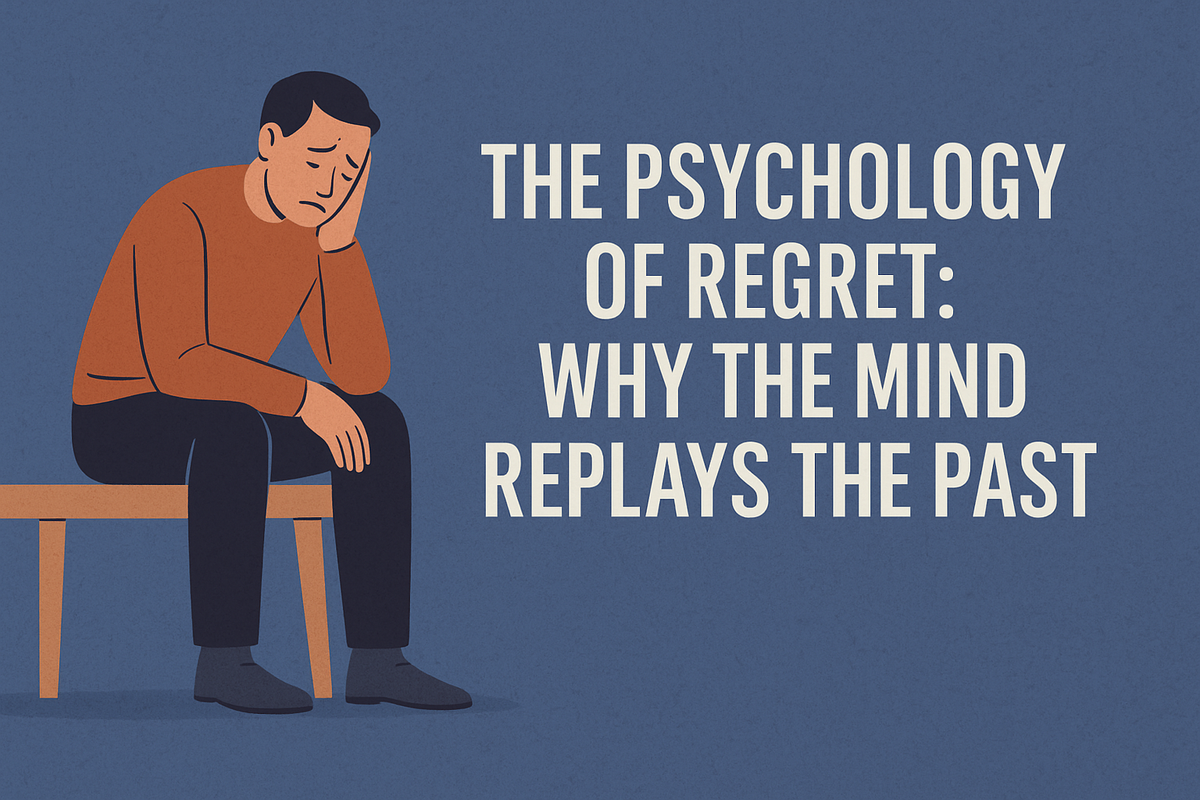
The Psychology of Regret: Why the Mind Replays the Past.

Your mind rewinds the past only to reveal the lessons you weren’t ready to learn then
Have you ever found yourself staring at the ceiling at 2 a.m., replaying a mistake you made years ago—an opportunity you didn’t take, a message you didn’t send, a job you didn’t accept, or a relationship you let go? If yes, you’re not alone. Regret is one of the most powerful—and universal—human emotions. It cuts deep, stays long, and often visits us when we least expect it. But why does the mind cling to these “what-ifs” so tightly? Why does it rewind moments we cannot change? Welcome to the psychology of regret—a mental world where emotions, memories, fears, and lessons collide.
1. What Exactly Is Regret? In simple terms, regret is the emotional pain we experience when we realize that our past decision could have resulted in a better outcome. Psychologists say regret has two components: 1. Cognitive: Understanding that another choice might have produced a better result. 2. Emotional: Feeling sadness, guilt, disappointment, or shame because of that understanding.
Regret isn’t just about the past—it’s about the past mixed with present pain.
2. Why the Mind Replays the Past: The Science Behind It The mind replays regretful moments for many psychological and neurological reasons. Here are the major ones:
(A) The Brain Is a Problem-Solving Machine Our brain evolved to learn from mistakes. So when you made a wrong decision in the past, your mind tries to “solve” it—even though it’s no longer solvable. This creates a loop of mental replay. Example: A woman who ended her relationship impulsively may re-analyze every conversation, every text, every fight—not because she can change the breakup, but because the brain wants to understand how to avoid such emotional pain again.
(B) The Mind Hates Unfinished Stories Human beings crave closure. Regret comes from situations where: - You didn’t get answers - You cut something short - You walked away from something meaningful - You left something unexplored When a story feels unfinished, the mind replays it, hoping one day it will “make sense.”
(C) The “Ideal Self” vs “Real Self” Conflict Psychologist Daniel Kahneman explains that humans have multiple versions of themselves: - The ideal self (who we want to be) - The real self (who we currently are) Regret is born when these two versions collide. Example: Your ideal self wanted to start a business at 23. Your real self didn’t. Years later, when you see someone your age running a successful startup, regret kicks in.
(D) The Brain Remembers Pain More Vividly From an evolutionary perspective, remembering pain was critical for survival.
Our minds are designed to focus on:
- What hurt
- What scared us
- What disappointed us
- What humiliated us
Because remembering these things helps prevent future danger. This is why a painful memory sits louder than thousands of good moments.
3. The Different Types of Regret Psychologists classify regret into several categories. Understanding them can help us decode our emotional patterns.
(1) Action Regret – “I shouldn’t have done that” This is regret about something you did. Examples:
- Quitting a job impulsively
- Saying something hurtful in anger
- Spending money unwisely
- Cheating, lying, or breaking trust
Action regrets hit hard, but research shows they usually fade faster because we did something—meaning we can process it more easily.
(2) Inaction Regret – “I should have done that” This is regret for something you didn’t do. Examples:
- Not taking risks
- Not expressing love
- Not choosing the college you wanted
- Not pursuing your passion
- Not investing money when you had the chance
Studies show inaction regret lasts longer than action regret.
"Why?"
Because unrealized possibilities are endless. They stay alive in our imagination forever.
(3) Regret of Lost Time This includes:
- Staying too long in a toxic relationship
- Wasting years in a job you hated
- Letting friendships fade
- Procrastinating dreams
This regret is especially heavy because time cannot be regained.
(4) Moral Regret This is when you feel bad because your actions went against your values. Example: Lying to a loved one. This regret can haunt a person for years because it shakes their identity.
4. Real-Life Examples of Regret We Don’t Talk About Enough To make this topic relatable, let’s look at regrets people silently carry: (A) The Missed Love Story A man had feelings for a close friend but never expressed them. Years later, she marries someone else. He attends her wedding with a forced smile while his mind whispers: “If only I had told her".
(B) The Parent Who Was Always “Too Busy” A working parent spends years focusing on career growth. When their child grows up and becomes distant, they suddenly think: “I should have spent more time with them.” Regret hits not because they didn’t love their child, but because they didn’t realize time was slipping away.
(C) The Woman Who Stayed Silent at Work A talented woman accepts being underpaid for years because she feared asking for a raise. Later, she learns her colleagues with less experience earned more. Every time she thinks about it, regret returns like a quiet storm.
(D) The Student Who Always Played Safe A student chooses a mainstream career because it’s “secure,” not because it’s fulfilling. Years later, they feel disconnected from their work and wonder: “What if I had followed my passion?” These moments are so common that almost everyone can relate to at least one.
5. The Hidden Benefits of Regret (Yes, There Are Some!) While regret feels painful, it’s not always the enemy. In fact, it has important psychological functions. (A) Regret Forces Self-Reflection Regret makes you ask:
- Why did I choose that?
- What was I afraid of?
- What was I trying to protect?
- What can I change next time?
This introspection leads to emotional growth.
(B) Regret Improves Decision-Making If used correctly, regret becomes a teacher, not a tormentor. Example: Someone who regrets overspending in their 20's may become financially disciplined in their 30's. (C) Regret Strengthens Empathy People who have felt regret understand the emotional world of others better. They learn to forgive, understand, and avoid quick judgment.
(D) Regret Can Spark Major Life Changes Many people transform their lives because regret shook them awake.
- Starting a business
- Leaving a toxic relationship
- Going back to school
- Repairing a broken family bond
Regret can be a breakthrough.
6. Why Some People Experience More Regret Than Others Not everyone experiences regret the same way. There are deep psychological factors involved: (1) Perfectionists They set extremely high expectations. So when things don’t go perfectly, regret becomes intense. (2) People-Pleasers They choose what others want, not what they want. Later, they regret living someone else’s life.
(3) Highly Emotional or Sensitive Individuals They feel and remember emotional pain more deeply. (4) Those Who Fear Failure Because they avoid risks, they accumulate inaction regrets over the years. (5) People With Low Self-Worth They believe they don’t deserve better, so they hesitate to act—and regret it later. Understanding these psychological patterns helps us approach regret more gently.
7. How to Stop the Mind From Replaying the Past Here’s the most important part:
Then a Question comes in our mind: How do we break free from the loop of mental replay?
So for that , Here are powerful, practical methods backed by psychology: (A) Accept That You Didn’t Know Then What You Know Now Most regrets come from comparing your past self with your present wisdom. But that’s unfair. You cannot expect your past self to act with information they didn’t have. Self-compassion is the enemy of regret.
(B) Reframe the Story Instead of: “I ruined everything.” Try:
“I made the best decision I could back then—with the mindset I had.”
(C) Ask Yourself: Is This Regret Useful or Just Painful? Helpful regret gives lessons. Unhelpful regret only hurts. If the regret doesn’t lead to improvement, it’s time to let it go. (D) Turn Regret Into Action Instead of replaying the past, ask:
- What can I do differently today?
- What small step can I take now?
Action kills regret.
(E) Close the Unfinished Story Sometimes closure means:
- Apologizing
- Expressing your feelings
- Letting someone go
- Forgiving yourself
- Accepting the outcome
The brain stops replaying stories once it feels they have ended.
(F) Practice “Future Self Thinking” Ask yourself: “How will my 60-year-old self view this?” Research shows people who think like this make wiser decisions and experience less regret. (G) Reduce Overthinking Triggers Avoid activities that fuel regret spirals: - Stalking old acquaintances - Comparing your life on social media - Revisiting old messages or pictures You’re not moving backward; don’t let your mind drag you there.
8. The Most Painful Regrets People Have Late in Life Psychologists interviewed thousands of elderly people to learn what regrets followed them into old age. Surprisingly, they weren’t about career, money, or achievements. Here are the most common ones:
(1) “I wish I had the courage to live a life true to myself.” Many admit they lived according to others’ expectations. (2) “I wish I hadn’t worked so hard.” Parents especially regretted missing their children’s childhood. (3) “I wish I had expressed my feelings more.” People regretted emotional silence more than emotional mistakes. (4) “I wish I had stayed in touch with friends.” Relationships matter more than achievements.
(5) “I wish I had allowed myself to be happier.” People realized happiness was a choice they didn’t make often enough. These insights remind us of a powerful truth:
Regret is often a signal that you are not living aligned with what truly matters.
9. Turning Regret into Peace: A New Way to View the Past Imagine regret not as a punishment, but as a compass. The past cannot be changed, but its meaning can. Here’s a mindset that brings peace:
(A) Regret Shows You What You Truly Value
If you regret not spending time with a loved one, it means relationships matter deeply to you. If you regret not taking a bold step, it means courage and growth matter to you.
(B) Regret Means You Care
If something bothers you today that didn’t bother you five years ago, it means you grew.
(C) Regret Is the Proof That You Are Evolving
If something bothers you today that didn’t bother you five years ago, it means you grew.
(D) Your Past Decisions Built Your Present Self
Even regrets shape strength, wisdom, empathy, and resilience.
(E) You Can Still Change the Ending
The past chapters are written, but the story hasn’t ended. You are still holding the pen.
10. Final Thoughts: You Deserve to Move Forward Regret is a teacher, not a jailer. It becomes destructive only when we let it trap us in endless rewinds. Every human has a past filled with decisions they would change if given the chance. But remember this: You didn’t fail. You learned. You didn’t fall behind. You grew differently. You didn’t ruin your future. You simply took a longer route toward it. The psychology of regret tells us one thing clearly: The mind replays the past not to punish you, but to prepare you. The goal is not to erase regret, but to understand it, learn from it, and finally—set yourself free from it. Your future doesn’t need the weight of your past. It only needs the wisdom.