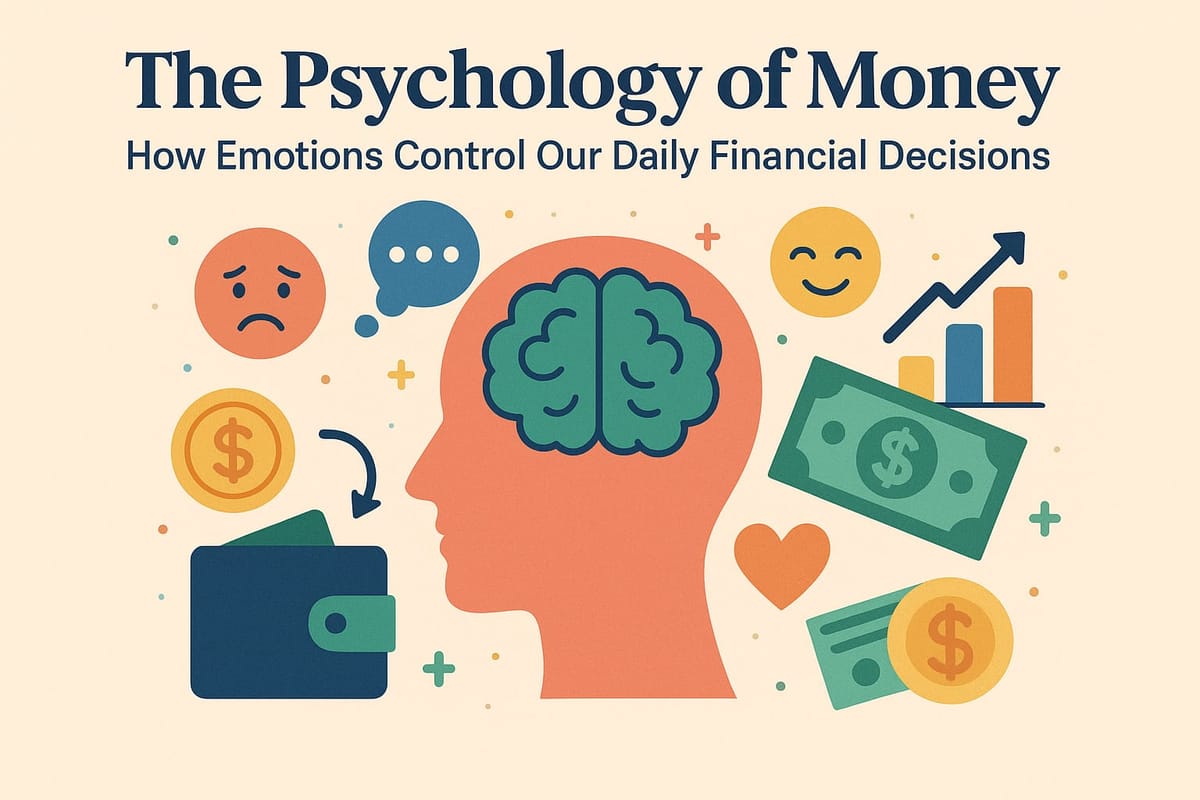
The Psychology of Money: How Emotions Control Our Daily Financial Decisions.

“The moment you understand your emotions around money, you stop working for money — and start making money work for you.”
Money isn’t only about numbers, calculators, bank accounts, and balance sheets.
Money is also memory, fear, ego, desire, comfort, security, and sometimes a wound from the past dressed as a financial decision.
We like to believe we make money decisions logically, but inside us sits a silent puppeteer: emotion.
It pulls the strings when we buy something we don’t need.
It whispers warnings when we hesitate to invest.
It pushes us into impulse spending, delayed saving, or unnecessary comparison.
This dance between emotion and money is what shapes our daily financial behavior.
Let’s explore this psychology — the unseen current beneath every swipe, every saving, every splurge — and look at how our emotions quietly script our financial life.
1. Why Money Is Not Just Currency — It’s Emotional Energy
Money carries emotional weight because it is tied to survival, identity, status, and security.
A salary is not simply income. It is validation.
A purchase is not just exchange. It is comfort.
Saving money is not just discipline. It is protection from uncertainty.
In Indian families, money is often tied to upbringing: • “Don’t waste.”
• “Save for the future.”
• “What will people say?”
• “Buy something nice when guests come.”
These messages seep into adulthood and shape how we spend, save, or fear money.
Money becomes a story — usually inherited, rarely questioned.
2. Childhood Money Memories: The First Sculptor of Our Financial Behavior
Our first emotional relationship with money often comes from home.
Example 1: The Scarcity Childhood
Riya grew up in a household where every rupee was stretched like dough.
Her parents talked about bills, rising prices, and sacrifices.
Today, even though Riya earns well, she hesitates to spend on herself.
Buying anything beyond necessity makes her guilty.
She checks her bank balance more times than WhatsApp.
Her fear is not about the present.
It is an emotional echo of the past.
Example 2: The Comfort Childhood
Arjun grew up hearing, “Beta, don’t worry about money. Papa will manage.”
Now he has a habit of impulsive purchases.
Every sale notification feels like a warm hug.
He lives pay check to pay check because spending feels like a familiar comfort.
Different childhoods.
Different emotions.
Different money personalities.
3. Fear: The Invisible Hand Controlling Daily Decisions
Fear is the strongest emotion in money psychology.
It shows up in many forms:
Fear of Poverty : Even financially secure people act from the fear of “What if everything collapses?” This fear leads to hoarding money, avoiding investment, or staying stuck in jobs they dislike.
Fear of Loss : People avoid investing because they imagine losing money more sharply than gaining money. This is why someone keeps funds in a savings account earning 2.5 percent instead of investing in SIPs.
Fear of Judgment: Buying a cheaper phone?
People fear being judged.
Buying an expensive phone?
People fear being judged.
This fear steers countless small decisions.
4. Stress Spending: When We Shop to Soothe
In difficult moments, people often buy something to feel better.
Shopping becomes emotional medication.
Example 3:
After a tough day at work, Neha orders food she doesn’t need.
The act of ordering feels like reclaiming control.
She knows it’s unnecessary, but emotionally it provides relief.
Example 4: A man receives criticism from his boss and instantly buys a new pair of shoes online.
He calls it a “treat”.
But psychologically, it’s an attempt to repair self-esteem.
This is why many people shop when: • They are stressed
• They feel lonely
• They are bored
• They feel unappreciated
Money becomes a bandage for emotional bruises.
5. The Dopamine Economy: Why Instant Purchases Feel Magical
Apps are designed like emotional playgrounds.
One click.
One swipe.
One tap.
And the reward arrives.
Dopamine — the brain’s happiness spark — fires not when we receive something, but when we anticipate it.
That anticipation fuels impulse buying.
That’s why:
• Add to cart feels exciting.
• Limited-time sale feels urgent.
• Free delivery feels like victory.
We’re not buying an item.
We’re buying a moment of dopamine.
6. Social Comparison: The Quiet Thief of Financial Peace
We rarely compare bank balances.
But we constantly compare lifestyles.
A friend’s Goa trip, cousin’s new car, colleague’s iPhone — all become emotional triggers.
Not because we need those things.
But because we fear “falling behind.”
Example 5:
Rahul bought a new bike, not because he needed one, but because “all my friends upgraded.”
The purchase was emotional, not functional.
Example 6:
A couple stretches their budget for a destination wedding because “everyone is doing it now.”
Comparison quietly manipulates financial decisions daily.
7. The Ego Effect: Spending to Look Successful
Many purchases are not for personal joy but for social perception.
Ego likes symbols:
A premium car.
A fancy watch.
A lavish restaurant bill.
The ego wants applause, not assets.
Example 7:
Karan refuses to take a bus even when it’s convenient.
He books cabs daily to “look successful.”
This emotional need burns more money than any sale ever could.
8. Love and Relationships: The Hidden Cost of Caring
Money is deeply emotional in relationships.
Example 8:
A husband buys expensive gifts to compensate for lack of time.
This isn’t spending — it’s emotional guilt shopping.
Example 9:
A girlfriend says yes to costly dinners she can’t afford, because she fears saying “no” will spoil the moment.
Example 10:
Parents overspend on children to give them a childhood better than their own.
Love often pulls the wallet more than logic.
9. Saving: Not Just Discipline, But Emotional Security
Some people love saving because it makes them feel safe.
For them: A growing bank balance is like breathing deeply.
An emergency fund is emotional Armor.
Investing in SIPs feels like planting small trees of security.
Example 11:
Priya transfers money to her RD the moment she gets her salary.
It’s not discipline.
It’s emotional peace.
10. Risk Appetite: Decision Making Based on Personality
Our personality shapes how we use money.
The Optimist
· Takes risks.
· Easily invests.
· Believes everything will work out.
The Pessimist
· Avoids investing.
· Prefers fixed deposits.
· Fears losing even a little.
The Overthinker
· Researches for months.
· Ends up taking no action.
· Because emotions overpower logic.
The Impulsive
· Acts immediately.
· Saves later.
· Regrets often but repeats behaviour.
We’re not dealing with money — we’re dealing with personality wrapped in emotion.
11. Procrastination: The Emotional Enemy of Financial Growth
People delay:
• Starting SIPs
• Buying insurance
• Building emergency funds
• Tracking expenses
Why?
Because emotional discomfort pushes them away from “serious” tasks.
Money tasks feel heavy because they force us to confront reality.
Example 12:
Ramesh knows he needs health insurance.
But the thought stresses him.
He delays, hoping the need disappears.
Emotion controls the timeline of financial decisions.
12. Cultural Conditioning: The Invisible Script
Indian society shapes our money behavior deeply.
Examples:
• Women often taught to “save every penny.”
• Men expected to “earn more, spend less.”
• Middle-class families taught to avoid risk.
• Weddings prioritized over savings.
• Education treated as investment but mental health treated as expense.
Our money mindset is less personal and more cultural.
13. How to Build a Healthier Emotional Relationship with Money
Here are practical shifts to break emotional patterns.
1. Track your emotional triggers
Notice why you spend — boredom, stress, fear?
2. Create a 24-hour rule
Wait one day before buying non-essential items.
3. Have a budget that matches your emotional personality
Impulse spender?
Use auto-debits for savings.
Overthinker?
Start small SIPs.
Anxious saver?
Allow guilt-free spending pockets.
4. Build financial boundaries
Say no to expensive social plans.
Say yes to plans that don’t drain savings.
5. Heal money wounds
Reflect on childhood money beliefs.
Rewrite them with awareness.
6. Set emotional goals, not just financial ones
Instead of “save 10,000,”
try “sleep peacefully knowing my emergency fund is growing.”
7. Use tech mindfully
Disable unnecessary sale notifications.
Turn off “flash offer” apps.
Use budgeting apps for calm, not chaos.
14. The Future of Money Psychology: AI, Behaviour, and Habits
AI will personalise finance based on emotions soon.
Apps will sense overspending patterns.
Budgets will adjust to mood.
Investments will be recommended based on behaviour, not just income.
But no AI can fix emotional overspending unless we face our feelings.
Because money follows emotion — always.
Conclusion: Money Is Emotional, And That’s the Secret to Managing It
We often chase “better financial habits” as if money lives outside us.
But the truth is:
Money lives inside us — in fears, dreams, memories, comparisons, insecurities, joy, and ego.
When we understand the emotions behind our daily decisions: • Spending becomes mindful
• Saving becomes peaceful
• Investing becomes natural
• Financial stress reduces
• Money becomes a tool, not a burden
We don’t need to fight our emotions.
We need to understand them.
Because the moment we understand why we handle money the way we do, we gain the power to change how we handle it.