Grow Big from Small: A Complete Guide to Expanding Your Small-Scale Business Area-Wise, City-Wise & Beyond.

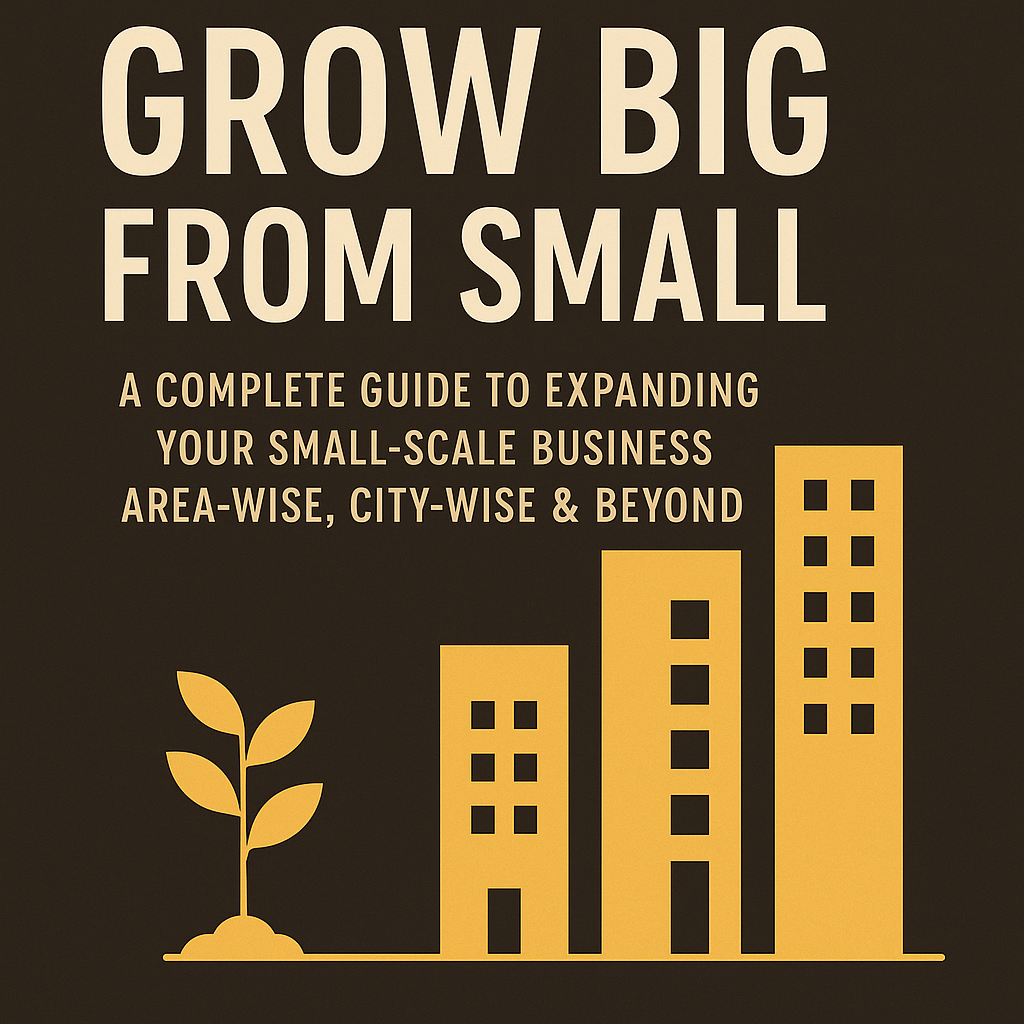
Running a small-scale business is one of the most courageous journeys anyone can take. It begins with a simple dream—maybe a home kitchen, a tailoring unit, a small retail shop, a tiffin service, or an online boutique. But turning this dream into a stable and growing business requires clarity, planning, and resilience. Most small business owners today face similar challenges: limited budgets, lack of market knowledge, fear of expansion, competition from big brands, and difficulty in scaling operations. The good news? Growth is possible for every business—whether you’re operating from a single room, a rented shop, or a small shared workspace. This blog explains how to grow your small-scale business area-wise, city-wise, and category-wise, along with the real problems most small businesses struggle with—and solutions you can apply immediately. Why Small Businesses Struggle to Grow Before learning how to expand, it’s important to understand what usually holds small businesses back. 1. Limited Capital & Cash Flow Issues Most small business owners work with tight budgets, making it hard to invest in marketing, inventory, or manpower.
2. Lack of Awareness of the Target Market Many small businesses sell products without understanding who their customers really are.
3. No Systematic Marketing Strategy Marketing is often limited to word-of-mouth or basic social media posting—no branding, no ads, and no consistency.
4. Fear of Expansion Owners fear taking risks, hiring new people, or entering new areas due to financial insecurity.
5. Too Much Dependency on the Owner Most small businesses run only when the owner is physically present, leaving no room for growth.
6. Competition from Bigger Brands Large retailers and online platforms attract customers with prices, offers, and convenience.
7. Limited Use of Digital Tools Many business owners avoid online payments, e-commerce listings, digital marketing, or automation techniques. Understanding these problems helps you avoid them as you scale. How to Grow Your Small-Scale Business: Step-by-Step Expansion Strategy.
I. AREA-WISE EXPANSION: Start Small, Grow in Surroundings
Area-wise expansion means growing within your local locality or nearby areas before scaling to the city level.
1. Identify Nearby Areas with Demand
- Study 3–5 surrounding neighborhoods
- Who lives there? (Students, families, working professionals)
- What do they buy most?
- Which products/services are missing there?
Example: A home tiffin service can target nearby PGs, hostels, and working women groups.
2. Use Hyperlocal Marketing Promote in your immediate area using: - WhatsApp groups
Flyers in apartments • Local influencers • Local Facebook groups • Posters near schools, gyms, markets Hyperlocal marketing is cheap and works extremely well for:
- Bakers
- Beauty services
- Tutors
- Boutiques
- Grocery shops
- Tailors
- Fitness trainers
3. Partner with Local Businesses Tie up with
- Gyms
- Kirana stores
- Cafes
- Schools
- Hostels
Example: A bakery can supply muffins to a local café. This increases reach without opening a new shop. 4. Offer Delivery in Nearby Areas Even a small delivery radius of 3–5 km helps scale rapidly.
If possible, use:
- Swiggy Genie
- Dunzo
- Local riders
5. Build Local Loyalty
Introduce
- Referral discounts
- Monthly subscription plans
- Loyalty cards Area-wise growth is built on trust. As local customers grow, your brand grows.
II. CITY-WISE EXPANSION: Enter Bigger Markets Strategically
Once your business is stable locally, start expanding across the city.
1. Understand City Demographics Every city has different zones:
- Commercial areas
- Residential areas
- High-income markets
- Student zones
- Industrial zones
- Choose areas based on your product demand.
Example:
- Cosmetics do well in high-income areas.
- Stationery and food items perform well in student zones.
2. Create a Scalable Model Your business should not collapse if you are not physically present. Build:
- SOPs (standard service procedures)
- Inventory system
- Staff training manuals
- Marketing templates
This makes replication easy. 3. Use Online Tools to Expand City-Wide. Register your business on:
- Google My Business
- Instagram Shop
- Facebook Marketplace
- Zomato/Swiggy (if food-related)
- Meesho/Flipkart (if product-based)
Online visibility = City-wide customers. 4. Open a Small Second Outlet or Micro Store. Not a big outlet—start with:
- Kiosks
- Pop-up stalls
- Weekend markets
- Flea markets
This helps test demand without huge investment. 5. Hire Skilled Staff for City-Wide Operations At this stage:
- Hire supervisors
- Use part-time or contract staff
- Delegate operations
- Expansion requires team building.
III. CATEGORY-WISE EXPANSION:
Add Value, Not Just More Products Category expansion means adding new but related products/services to your business. ✔ 1. Expand Within Your Niche If you sell clothes:
- Add accessories
- Add kidswear
- Add festive collection
If you run a beauty salon:
- Add makeup services
- Add hair treatments
- Add skin care packages
Focus on complementary offerings. 2. Use Customer Feedback to Decide New Categories.
Ask your customers: 1. What would you like us to add? 2. What problem should we solve next?
Customer-driven expansions rarely fail. 3. Upselling & Cross-Selling Teach your staff:
1. How to upsell (upgrade version) 2. How to cross-sell (related product)
This increases revenue without additional cost. Major Problems Faced by Small-Scale Business Owners (With Solutions) Here’s a detailed section you can keep in your blog:
1. Cash Flow Crunch
Problem: Profit comes, but money gets stuck in inventory, suppliers, or customers not paying on time.
Solution:
- Keep 3–6 months of operating capital.
- Track expenses weekly.
- Negotiate supplier terms.
- Avoid unnecessary inventory.
2. Lack of Marketing Knowledge
Problem: Most businesses depend only on word-of-mouth.
Solution:
- Learn basics of Instagram + WhatsApp business marketing.
- Create a brand identity: logo, color theme, tone.
- Use reels + before/after content.
3. Poor Pricing Strategy
Problem: Charging too low or too high without calculation.
Solution:
- Use the 4-step formula:
- Cost Price + Labor + Overhead + Profit Margin = Selling Price
4. Inconsistent Quality
Problem: Quality drops when demand increases.
Solution:
- Create fixed recipes/procedures.
- Train staff regularly.
- Conduct weekly quality check
5. No Financial Tracking
Problem: Many owners don’t maintain accounts.
Solution: Use simple apps:
- Khatabook
- Vyapar
- Zoho Books
6. Burnout & Mental Stress
Problem: Small business owners work 12–16 hours daily.
Solution: • Delegate small tasks. • Take one weekly holiday. • Create schedules and follow them.
7. Competition from e-commerce & big stores.
Solution: • Offer personalized service • Focus on quality • Build strong customer relationships • Small businesses win through trust, not size. Conclusion:
Growth Is a Journey, Not a Jump Expanding a small-scale business requires patience, planning, and consistent efforts. Whether you're growing area-wise, city-wise, or category-wise, remember:
- Start small
- Scale smart
- Stay consistent
- Keep learning
- Never fear expansion
Every successful brand today—big or small—started exactly where you are now. If you build with passion and strategy, your small business can become a city-wide or even nationwide brand.